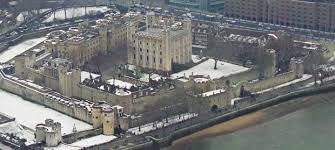
The Tower of London has been many things over its nearly thousand-year history—a fortress, a palace, a prison, even a place of execution—standing tall on the banks of the River Thames in the heart of Great Britain.
Back in the 1080s, William the Conqueror started building the White Tower as the centerpiece of his London stronghold, not long after he invaded the British Isles (1066) and became England’s first Norman king.
Though it’s called the Tower of London, it’s not just a single tower but a sprawling complex. Built as a massive keep in a strategic spot, it was meant to guard London and solidify Norman control over the capital. Even today, it stands as a prime example of advanced military architecture from the 11th century, with later additions in the 13th and 14th centuries. Under Henry III (1216-72) and Edward I (1272-1307), the site expanded to include a growing palace complex.
Parts of the tower had long been used to hold prisoners, but when Henry VIII (1509-47) stopped using it as a royal residence, its role as a prison grew. It became a place where religious dissenters, political prisoners, traitors, criminals, and even royalty were locked away.
In just the 16th century alone, three English queens—including Lady Jane Grey, the “Nine Days’ Queen”—were executed on Tower Green. As grim as it sounds, being executed here was actually a privilege reserved for nobles and high-ranking figures. At least Tower Green offered a private death, away from the rowdy public spectacles of other city executions.
The tower’s final execution happened during World War II, when German spy Josef Jakobs faced a firing squad.
During the English Civil War (1642-49), Charles I’s loss of the tower to the Parliamentarians was a major blow—it led to the fall of London and played a huge role in the king’s defeat and eventual execution.
The tower’s history is packed with big names. In 1389, Geoffrey Chaucer—yes, the guy who wrote The Canterbury Tales—worked as a clerk of works and oversaw the construction of Tower Wharf.
In 1605, Guy Fawkes was tortured here after his failed Gunpowder Plot to blow up Parliament. Then, in 1671, Colonel Blood tried to steal the Crown Jewels after overpowering the elderly keeper of the Jewel House. (He was caught but shockingly pardoned later.) Today, the jewels are still kept in the tower under heavy guard, just like in Blood’s time.
For six centuries, the tower also housed a rotating collection of exotic animals—everything from elephants and lions to polar bears—kept for the amusement of monarchs and later the public. The menagerie closed in 1835, and the animals were moved to the newly opened London Zoo.
Nowadays, visitors can walk the fortress walls, explore guard towers, marvel at the Crown Jewels, and check out Henry VIII’s armor. The Yeoman Warders (better known as Beefeaters) don’t just guard the place—they also give entertaining tours, which are a highlight for many.
How to Get There
The tower’s central London location makes it super easy to reach. It’s just a five-minute walk from Tower Hill Underground Station. You can also take trains or the Docklands Light Railway, both of which stop nearby. Buses (15, 42, 78, 100, RV1) go to the tower, and riverboats stop at Tower Pier. Taxis, bikes, or walking are also great options. Driving? Not ideal—it’s in the Congestion Charge Zone, and parking is limited (and pricey).
When to Go
The tower is open year-round, except for Christmas (Dec 24-26) and January 1. It gets busiest during school holidays and summer.
How to Visit
With so much history packed into one place, you could easily spend days exploring. Swing by the Welcome Center for info on everything from the Crown Jewels and the famous ravens to the prisoner exhibitions and family activities.