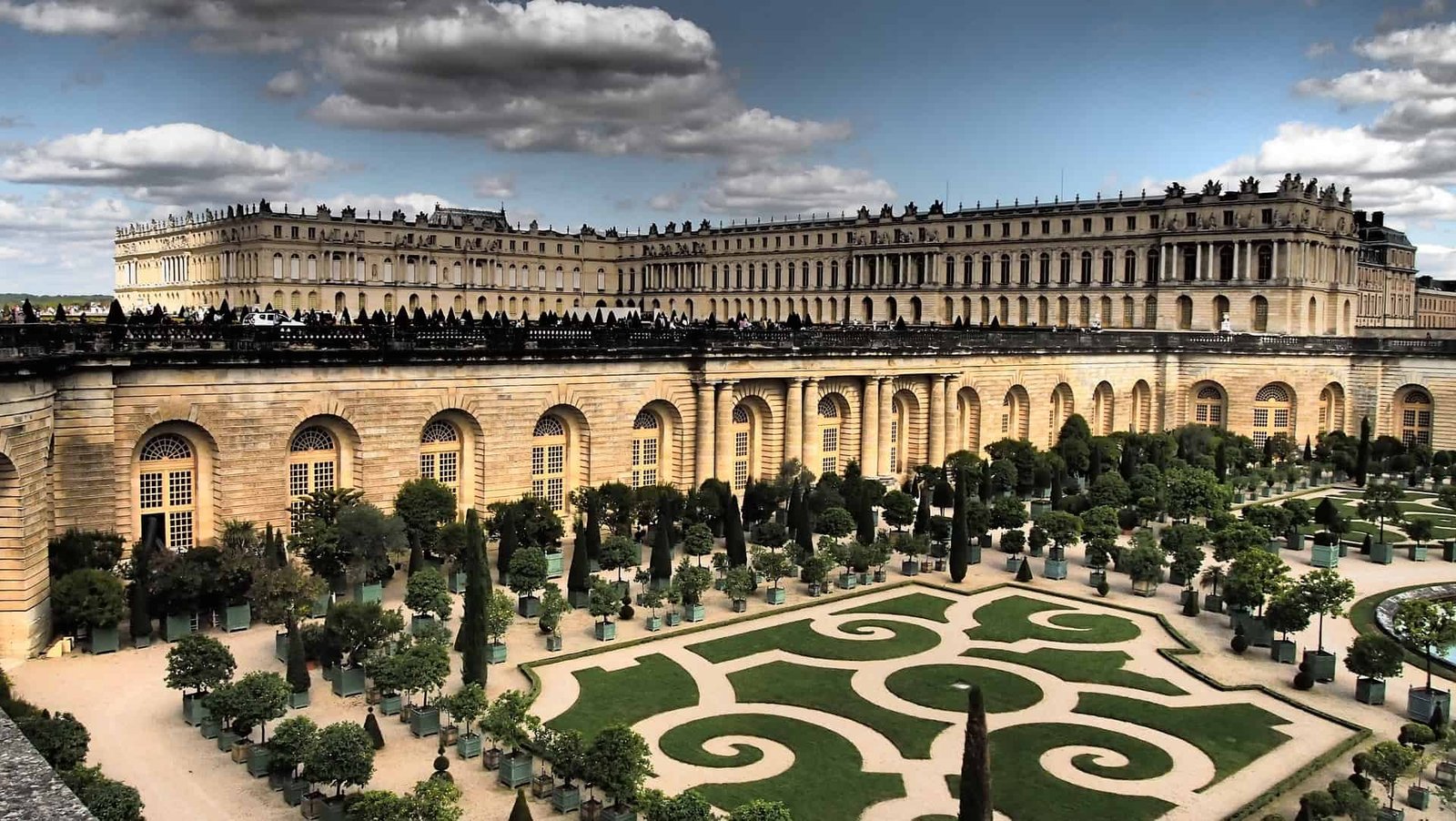
Few palaces can match the sheer extravagance of France’s Château de Versailles. Sitting just outside Paris, this former residence of French kings lets visitors step into the world of royalty. The grand complex was ordered by Louis XIV, who shifted the nation’s government to Versailles in 1682 and wanted a palace worthy of his reign’s glory.
The Galerie des Glaces (Hall of Mirrors) is where this ambition shines brightest. Stretching nearly 240 feet, King Louis XIV’s stunning ballroom—decked with towering arched mirrors, gilded statues, and glittering chandeliers—transports visitors straight into the lavish elegance of the mid-1600s. The real jaw-dropper? The arched ceiling, painted by Charles Le Brun with scenes celebrating the king’s triumphs. This was also where history was made in June 1919 with the signing of the Treaty of Versailles, marking the official end of World War I.
1 of 19
Louis XIV, nicknamed the Sun King for his emblem of Apollo, designed the lavish estate along an east-west axis to follow the sun’s path.
Photograph courtesy Thomas Garnier, EPV in collaboration with Skydrone
The palace’s grandeur extends to its surroundings. The 17th-century Grand Trianon—a dreamy collection of pink marble buildings and enchanting gardens—was another key part of Versailles’ royal life. Later, Napoleon Bonaparte often stayed in this cozy retreat, and Charles de Gaulle turned its northern wing into an official presidential guesthouse, still used for France’s head of state today.
Versailles stood as the heart of French royal power for over a century—until 1789, when angry revolutionaries stormed the palace and forced out Louis XVI and Marie-Antoinette. The royal couple was marched back to Paris, where they ultimately met their fate at the guillotine.
Though the monarchy is long gone, Versailles remains a national treasure. Starting in the 1800s, parts of the palace opened to the public as a museum. By 1979, its incredible history, architecture, and landscapes secured its spot on the UNESCO World Heritage List.
Sites & Bites
At the village’s indoor market, Marché Notre-Dame, stalls tempt visitors with cured meats, olives, cheeses, and creative twists on macarons. Over at Hotel Le Louis Versailles Château, mixologists craft regal-inspired cocktails at a glowing circular bar. For a truly royal meal, head to the Trianon Palace Versailles after dark for Gordon Ramsay’s Michelin-starred dining.
When to Go
There’s never a bad time to visit Versailles, but spring and summer bring its sprawling gardens to life. While the gardens stay open, the palace buildings are closed on Mondays. Sundays and Tuesdays tend to be busier, as many Paris museums shut those days. For something extra special, plan a trip in July for Bastille Day festivities—complete with fireworks, light shows, and costumed performers.
How to Get There
Versailles lies about 10 miles from Paris and is easy to reach by car, taxi, bus, or train. The RER C line connects central Paris to Versailles Rive Gauche station—just a five-minute walk from the palace. Trains also run from Paris Montparnasse to Versailles Chantiers and from Paris Saint Lazare to Versailles Rive-Droite, each a 10-minute stroll away. Bus 171 (RATP) runs from Pont de Sèvres metro station straight to Versailles.